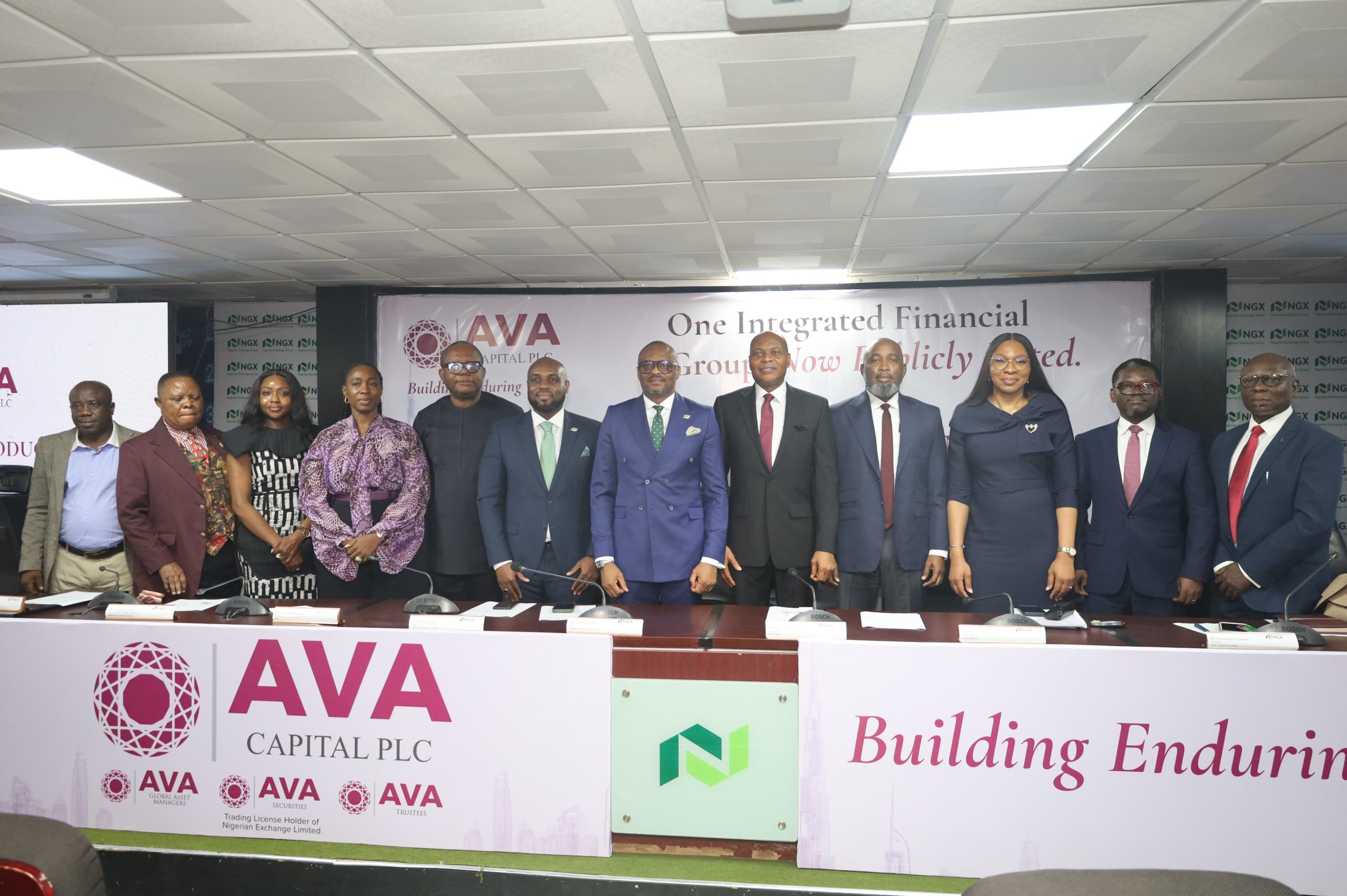
Nigerian capital markets operator AVA Capital Plc, in its unaudited management accounts for the period ended 30 June 2026, reported a dramatic scale-up in both revenue and profitability, alongside a balance sheet that has grown more than fivefold since December 2025.
Revenue and profit trends — Positive. Group gross earnings hit ₦3.46bn, with profit before tax of ₦1.46bn and profit after tax of ₦1.02bn. The comparative company-only figures show growth from ₦274.7m revenue and ₦68.3m profit after tax a year earlier to ₦1.2bn and ₦631m respectively — a multiple-fold increase. This matters because it signals the business is scaling rapidly, likely aided by newly consolidated subsidiaries (Securities, Asset Management, Trustees) following a December 2025 restructuring.
Margins and cost structure — Positive. Total operating expenses of ₦953m against total income of ₦2.41bn imply a healthy operating margin (~60% pre-tax margin on total income). Interest income (₦2.04bn) is a major contributor, alongside fees and commissions (₦863m), though interest expense of ₦1.04bn (likely tied to client investment fund liabilities) took a bite out of net operating income.
Balance sheet strength — Neutral to cautionary. Total assets exploded from ₦19.1bn (Dec 2025) to ₦111bn, driven almost entirely by a jump in "Client Investment Fund" liabilities from ₦9.2bn to ₦92.8bn. This is a fiduciary/trust liability, not core company debt — the group reports no borrowings, and holds ₦7.29bn cash. Equity rose modestly to ₦12.7bn. The sheer scale of client fund liabilities versus shareholder equity (roughly 7:1) is typical for a trustee/asset manager but warrants scrutiny of asset quality behind it.
Comparison to prior period — Positive. Both Group and Company figures show substantial sequential improvement, though the Group-vs-2025 comparison is complicated by the common-control business combination, meaning growth isn't purely organic — part reflects consolidation of previously separate subsidiaries.
Red flags — Mixed. Notably, subsequent to period-end, the SEC announced revised (higher) minimum capital requirements for capital market operators, compliance deadline June 2027. The Board has approved a private placement to raise capital — a dilution risk for existing shareholders. Also worth flagging: leadership includes an "Acting" CFO, and this is an unaudited filing.
Valuation implications. With EPS of 20.4 kobo (Group) on a share capital of 5bn shares (₦1 par), and total equity of ₦12.7bn, any valuation work needs to account for pending capital raise dilution and the fact that H1 profit was flattered by consolidation accounting, not necessarily repeatable organic growth.
Top 5 Investor Takeaways
- Explosive top-line and bottom-line growth, partly organic, partly from subsidiary consolidation.
- Zero external borrowings — a clean balance sheet from a leverage standpoint.
- Massive growth in client fund liabilities (fiduciary, not company debt) reflects business momentum in trusteeship/AUM.
- Pending SEC-driven recapitalization signals likely share dilution ahead via private placement.
- Unaudited status and "Acting CFO" designation warrant a wait-and-see approach until audited full-year numbers land.
Overall Verdict: Bullish — strong growth and a debt-free balance sheet are compelling, tempered by dilution risk and one-off consolidation effects.
Trajectory signal: The company appears to be scaling from a private capital-markets boutique into a diversified, SEC-regulated financial group ahead of a planned NGX listing — a growth story still early in execution.
Caution on single-quarter reads: Six-month results reflect one accounting period, heavily influenced by a recent business combination and unaudited figures; they may not represent a stable, repeatable run-rate, and near-term capital raising could materially alter the share structure.
.jpg)